

Refining the Everyday: Community Spaces at F5 San Jose
In a competitive tech market like San Jose, office design directly affects recruitment, retention, and day-to-day morale. The F5 San Jose Office Remodel rethinks shared workplace amenities—kitchen, lounge, training room, and break areas—to support how staff actually use the office today.
F5, a technology company known for application delivery and cybersecurity solutions, wanted to modernize its amenities and create a more compelling in-office experience. The remodel focuses on community spaces that support flexible meetings, informal collaboration, and moments of pause throughout the workday.
For this project, I centered the photography on one primary narrative thread: how design details shape experience. Materials, lighting, acoustics, and spatial layering work together to make the office feel less corporate and more like a high-end hospitality setting—while still functioning as a high-performance workplace.
Project Overview
Project: F5 Office Remodel
Project Type: Tenant Improvement (TI)
Building Type: Commercial Office
Location: San Jose, CA
Photography Year: 2025
End Client:F5, Inc.
Architect: Arc Tec, Inc.
General Contractor: McLarney Construction
Key Partners: LJ Interior (ceilings and acoustical walls)
Photography Scope: Interior Architectural Photography
Client Use: Portfolio, Online and Print Marketing, Client Presentations + Proposals
Photographer: Rob Calderwood Architectural Photography (San Francisco Bay Area)
Design Story
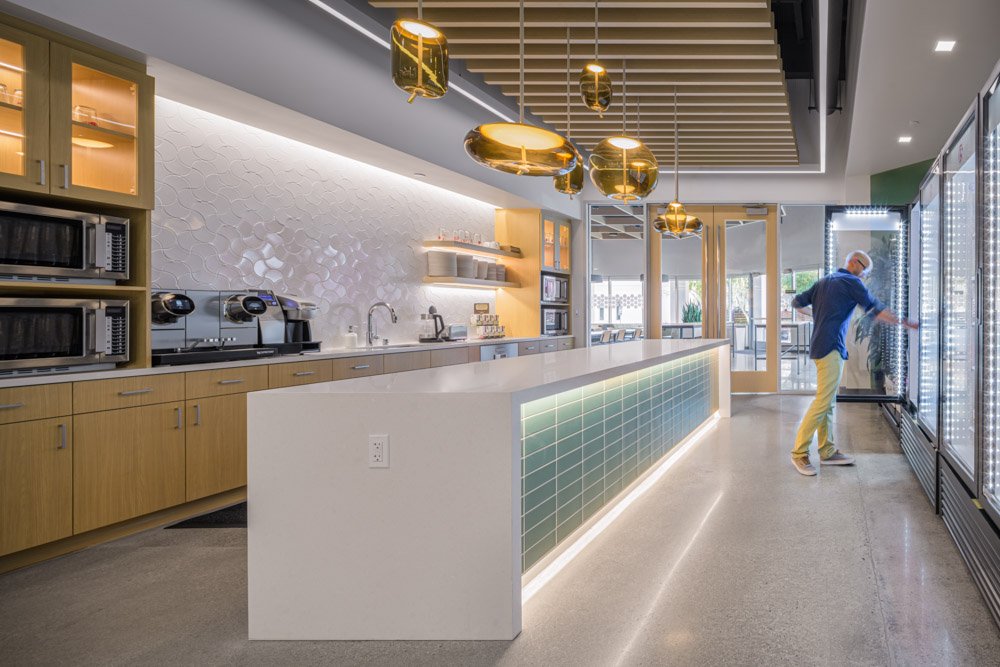
The remodel centers on shared amenities: a kitchen with generous snack and beverage options, a flexible training room, a spacious break area, and a dining lounge designed to feel more like a boutique hotel than a tech office.
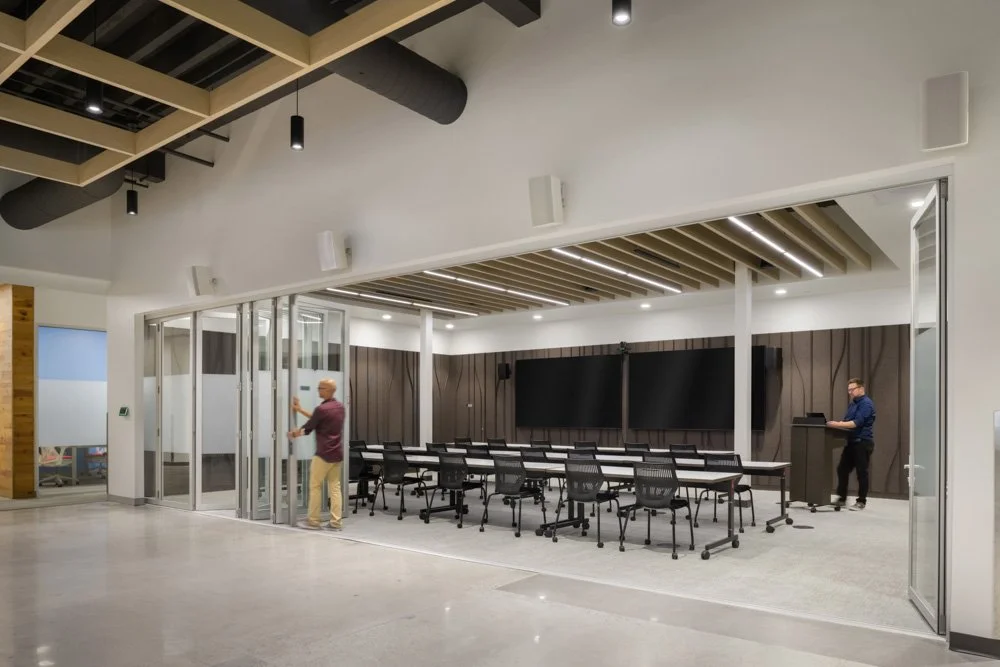
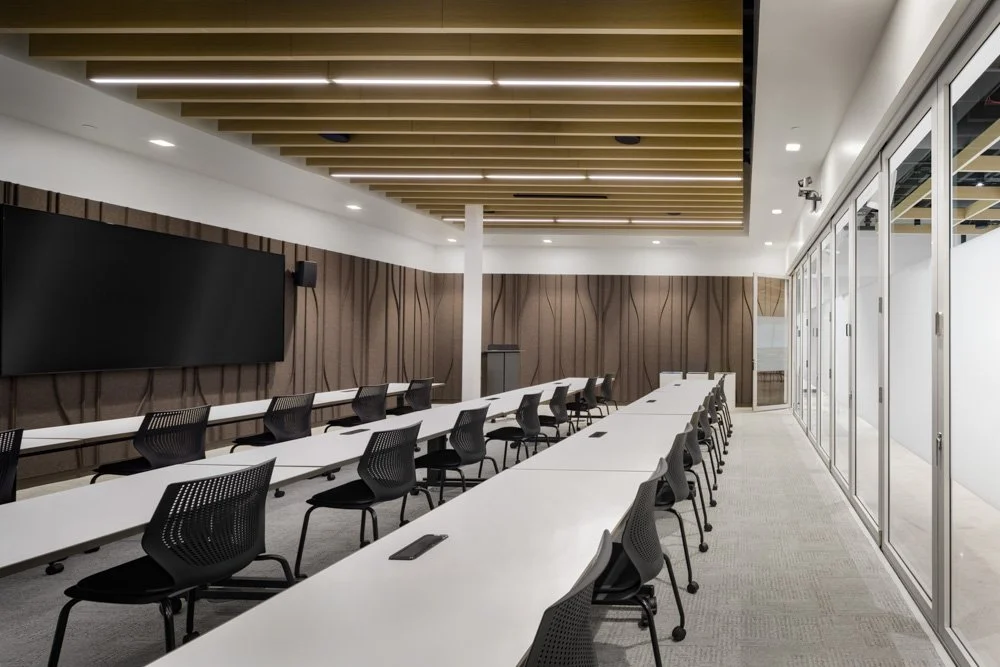
These spaces support multiple modes of work. The training room accommodates presentations and structured learning. The break area and kitchen allow for informal meetings and social interaction. The lounge offers a quieter, more refined setting for conversation or focused work.
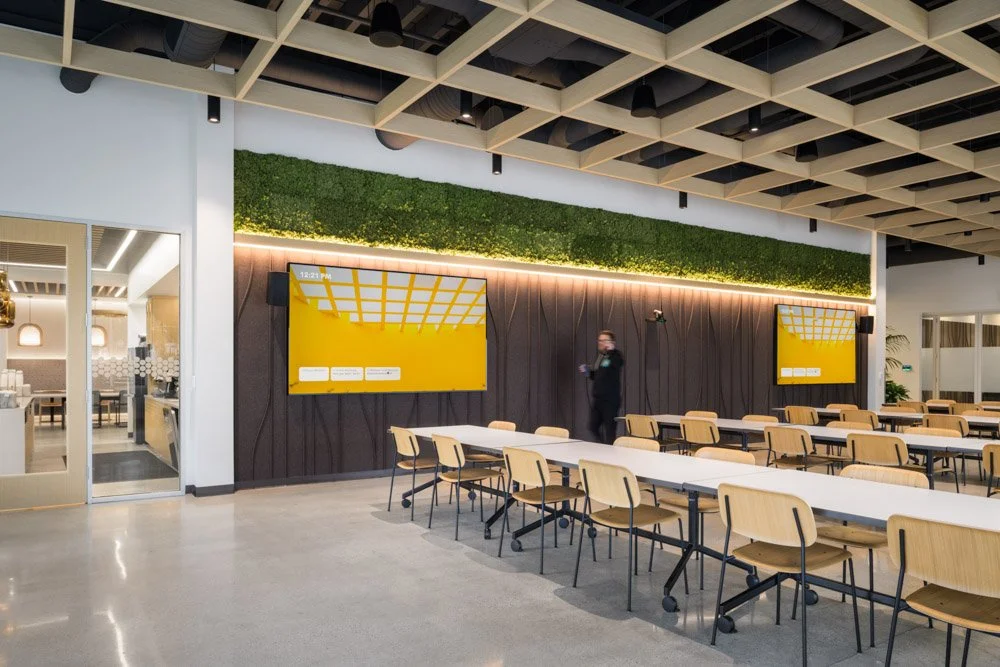
Material choices play a critical role. Textured felt acoustical panels and wood baffles soften sound while introducing warmth and depth. In a tech office where glass, drywall, and hard flooring dominate, these elements improve acoustic comfort and create a more tactile environment.
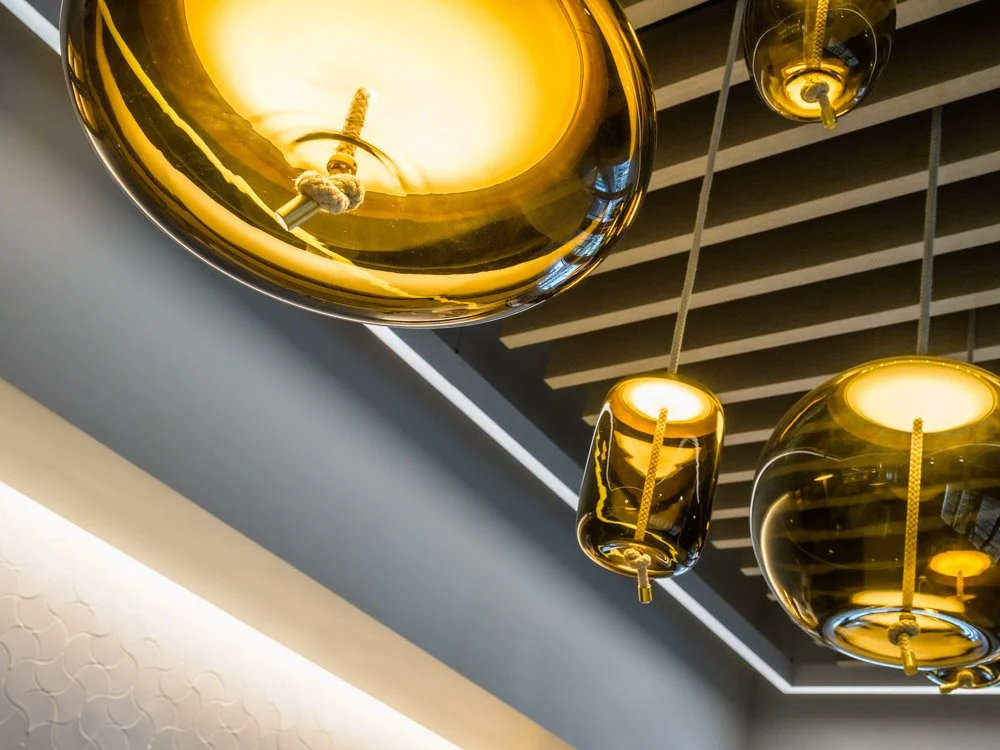
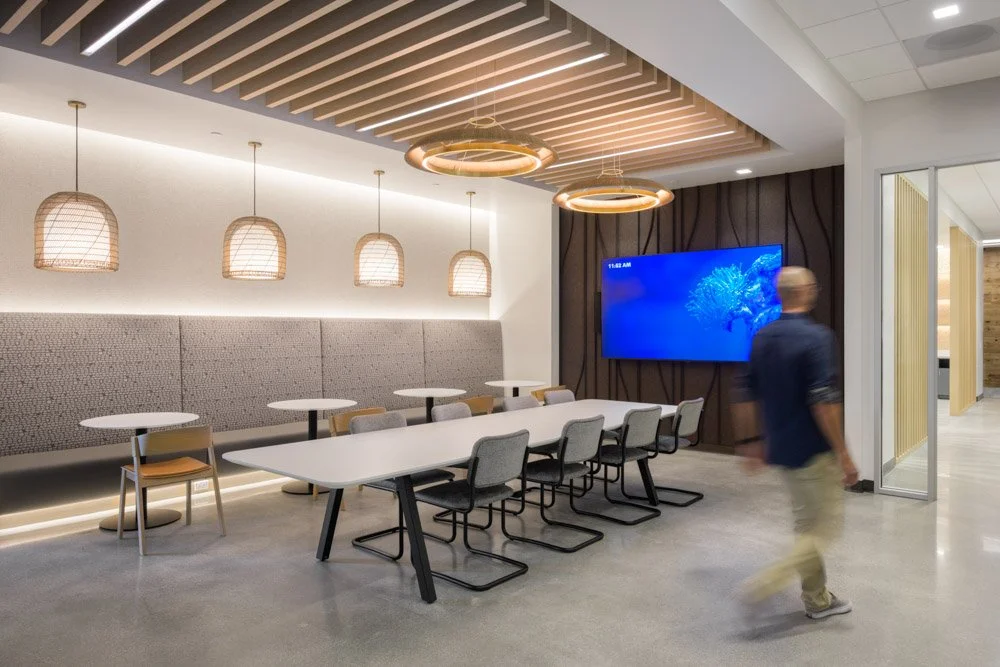
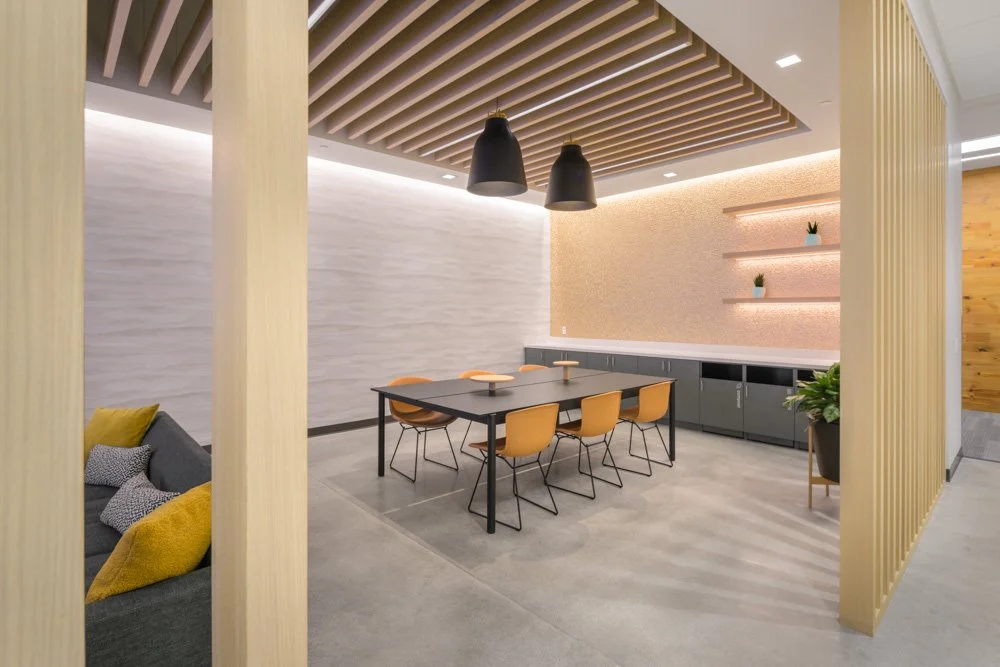
Lighting reinforces that shift. Hidden strip lighting integrated into shelves, the kitchen island, and wall conditions adds functional illumination while maintaining clean lines. Golden wall tiles introduce color and reflectivity without overwhelming the space. In the kitchen, amber glass pendants bring warmth; in the dining lounge, basket-weave fixtures add a crafted, layered quality.
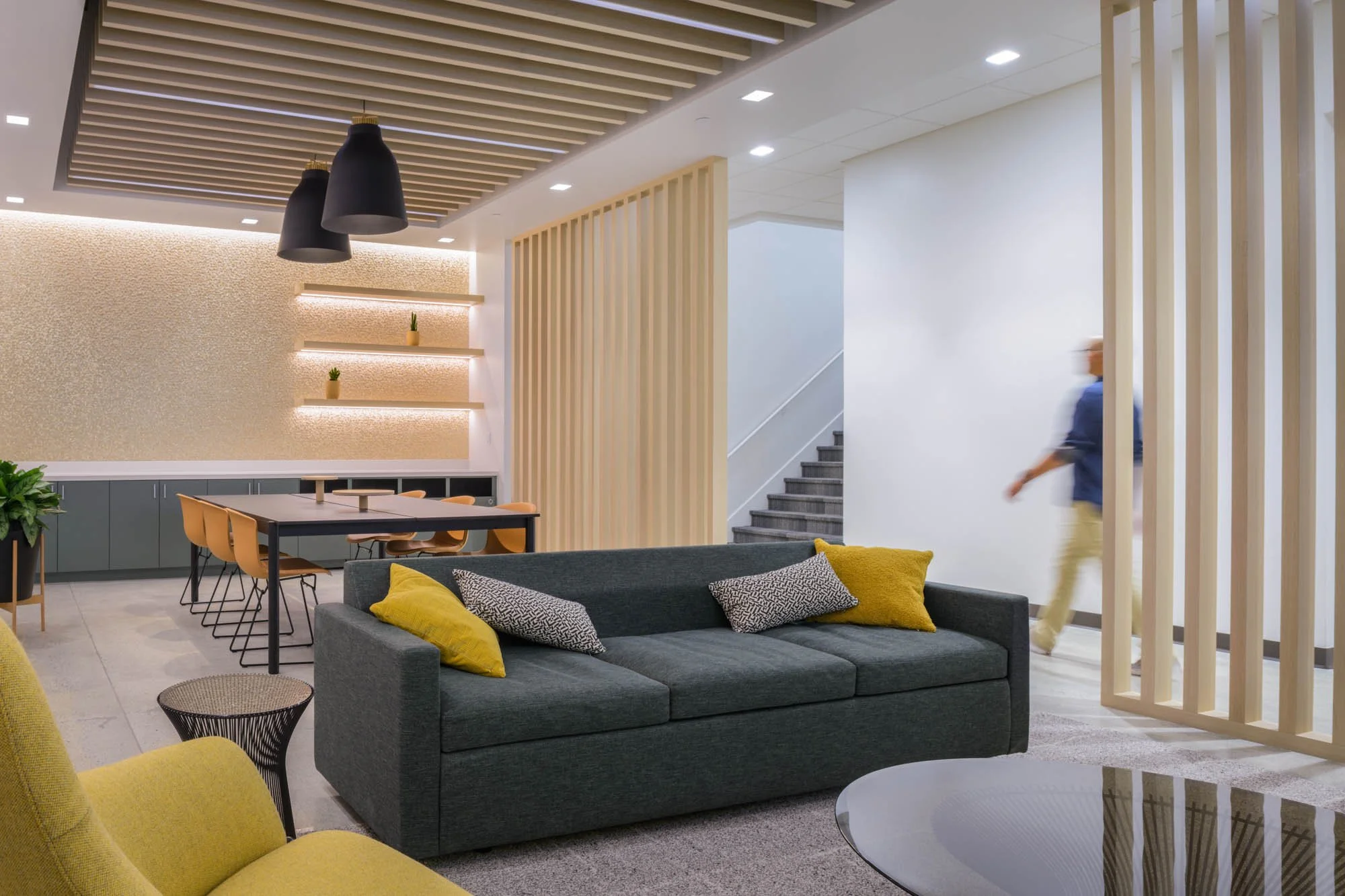
A screen of vertical wood fins in the lounge subtly separates the space from the corridor. It creates privacy without closing the room off—maintaining visual connection while defining zones.
Constraints & Opportunities
This was an interior remodel within an active tech campus, which shaped both design and photography.
Built constraints included:
Existing structural grid and ceiling heights
Daylight variability from large window banks
Integration of new lighting within existing infrastructure
Acoustic control in open, shared areas
Photographic constraints included:
Mixed color temperatures from daylight and multiple fixture types
Strong direct sunlight in the break area
Access limited to a holiday schedule
Occupancy restrictions (no permission to photograph staff)
We photographed in December 2025, over a holiday when most of the office was vacant. At one point during the kitchen shoot, several staff members entered simultaneously, briefly turning a small space into a crowded scene. While the moment would have added natural activity, we did not have clearance to include identifiable staff, so timing and patience became essential.
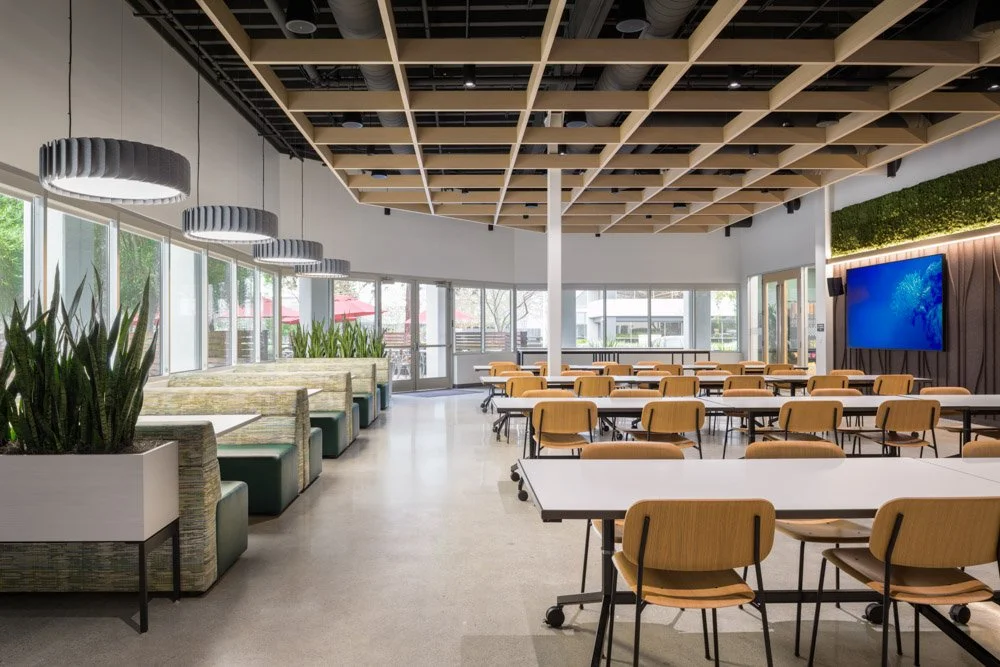
Large window banks in the break area created strong contrast between interior lighting and direct sun. To maintain material clarity and balanced exposure, I captured multiple frames at different exposure levels and blended them in post-processing. This approach allowed both the exterior light and interior finishes to read accurately—particularly the felt panels, wood textures, and metallic tile.
How We Approached the Shoot
I began with the architect’s shot list, then adjusted compositions in the field to refine alignment, perspective, and light balance.
Pre-shoot coordination focused on confirming access windows, identifying key design moves to prioritize, and understanding how the images would be used—primarily for portfolio, marketing, and client presentations.
Because of the layered lighting design, managing exposure was central to the workflow. Rather than overpowering the scene with additional artificial lighting, I relied on:
Strategic timing to control daylight intensity
Multiple exposures to handle bright windows and fixture highlights
Careful color correction to reconcile daylight and warm decorative lighting
In the lounge—the hero space for this feature—I emphasized the rhythm of the vertical wood fins, the glow of pendant fixtures, and the layering of materials. Slight shifts in vantage point made a significant difference in how the screen reads: either as a barrier or as a permeable filter.
Focal lengths were chosen to maintain spatial accuracy. Wider perspectives were used to explain adjacency between kitchen, break area, and lounge, while slightly longer lenses isolated detail moments such as the amber glass pendants and golden tile.
As an architectural photographer Bay Area firms rely on for interior-focused projects, I aim to balance documentation with atmosphere—capturing how the space performs without distorting geometry or proportions.
Image Highlights
The Lounge with Wood Screen
This hero view anchors the story. The vertical fins create depth and foreground interest, while the lighting layers add warmth. The image clarifies how separation and openness coexist within the same architectural gesture.
Kitchen Detail – Amber Glass Pendants
A tighter composition isolates the glass fixtures against the modern cabinetry and hidden strip lighting. The amber tones reinforce the hospitality reference while maintaining a clean, contemporary aesthetic.
Break Area – Daylight and Acoustics
A wider frame shows the relationship between window banks, felt acoustical panels, and seating zones. This image demonstrates how daylight, texture, and sound control intersect in a shared workspace.
Dining Lounge – Layered Fixtures
Basket-weave light fixtures introduce visual complexity overhead. By balancing ambient and decorative light, the photograph highlights the intended atmosphere without blowing out highlights or flattening shadow detail.
Results & How the Client Uses the Images
The primary clients—Arc Tec, Inc., McLarney Construction, and LJ Interiors—are using these images in their portfolios, on their websites, and across social media. The photographs also support client presentations and future proposals.
For commercial office remodels, images must communicate more than aesthetics. They need to demonstrate spatial logic, material quality, and build execution. Clear interior architecture photography helps architects and GCs show potential clients what thoughtful upgrades can achieve in an existing footprint.
Projects like this also expand my body of work as a commercial architecture photographer, particularly in the Silicon Valley and San Jose markets where workplace design continues to evolve.
You can explore related workplace projects in the portfolio or learn more about my approach to architectural photography services. If you’re wrapping up a remodel in the Bay Area and need publication-ready photography, you’re welcome to connect through the contact page.
Key Takeaways
Design: Shared amenities were reimagined to support collaboration, training, and informal work within a refined, hospitality-influenced setting.
Materials: Felt acoustical panels, wood baffles, golden tile, and amber glass pendants shape both acoustic comfort and visual identity.
Spatial Strategy: Vertical wood fins provide separation while maintaining openness and visual continuity.
Constraints: Mixed lighting conditions and strong daylight required careful exposure blending and post-processing precision.
Photography: Compositions prioritized accurate geometry, layered light, and clear explanation of spatial relationships.
Users: The remodel improves daily experience for F5 staff, supporting morale and retention in a competitive tech market.
Outcomes: Images are being used for portfolios, marketing, and client presentations by architect, GC, and trade partners.