

A Redwood City Life-Science Workplace Shaped by Light and Views
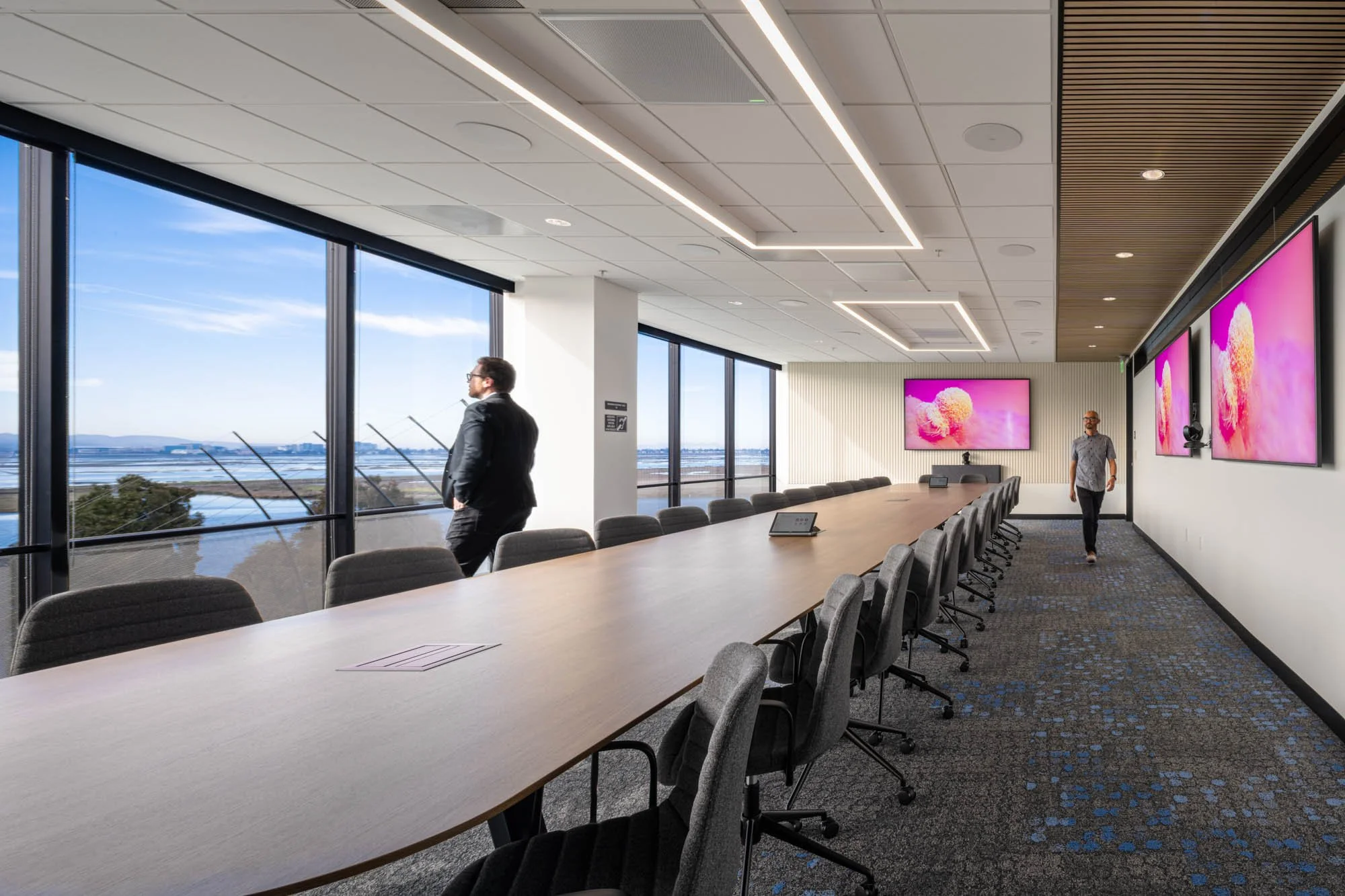
This confidential life-science project in Redwood City, California brings together office, laboratory, and vivarium spaces within a single floor plate overlooking the San Francisco Bay and surrounding wetlands. The goal was straightforward but demanding: create a workplace that supports focused, high-stakes scientific work while still offering comfortable, human-scaled spaces for collaboration and recovery throughout the day.
The interior team approached the project as a balance between performance and calm. Brand-aligned color accents appear selectively within a largely neutral palette, while glazing on all sides of the plan brings daylight and long views deep into both office and support spaces.
Photographing the project meant working carefully with light, reflections, and occupied conditions—so the images could communicate clarity, intention, and usability without distraction.
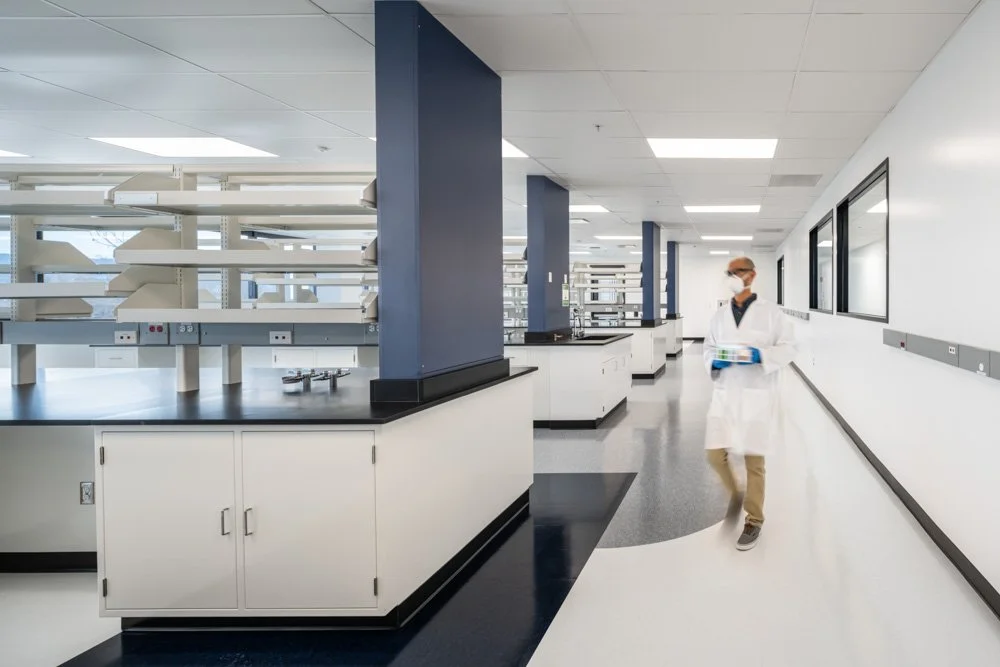
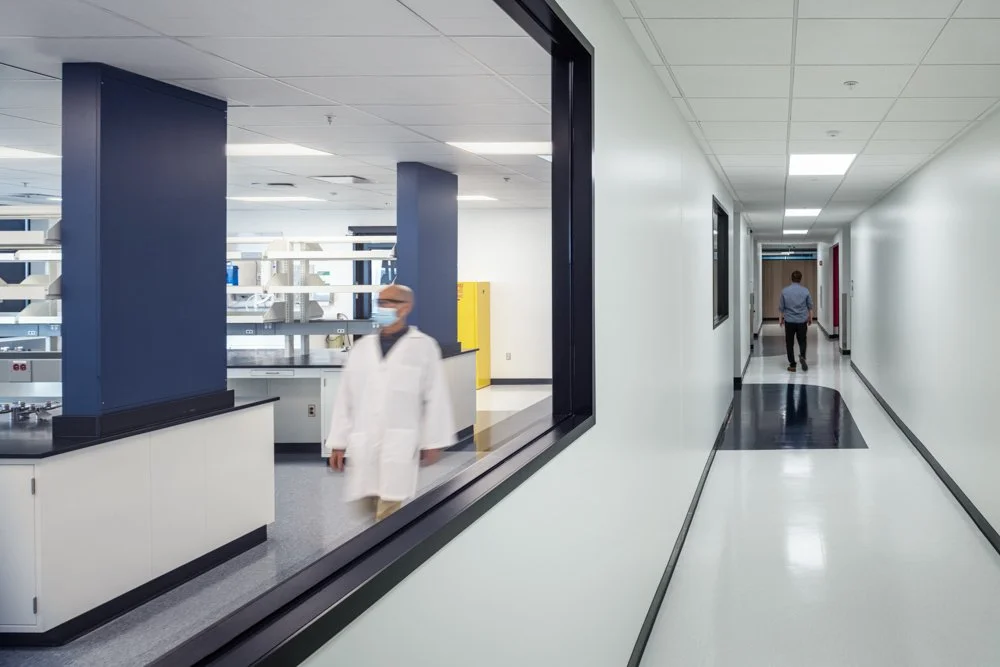
The central thread for this case study is how light, transparency, and restraint were used—both in design and in photography—to support serious work without visual noise.
Project Overview
Project: Confidential Life Science Office + Labs
Project Type: Tenant Improvement
Building Type: Life Science Workplace
Location: Redwood City, CA
Photography Year: 2025
End Client: Confidential Life Science Client
Architect: DGA
General Contractor: Landmark Builders, Inc. (San Jose, CA)
Photography Scope: Interior Architectural Photography
Client Use: Portfolio, Online and Print Marketing, Client Presentations + Proposals
Photographer: Rob Calderwood Architectural Photography (San Francisco Bay Area)
Design Story
The workplace combines several distinct environments—open office areas, enclosed conference rooms, flexible lounge spaces, labs, and vivarium suites—into a cohesive whole. Rather than separating “office” and “lab” into different worlds, the design treats them as connected parts of a single workflow.
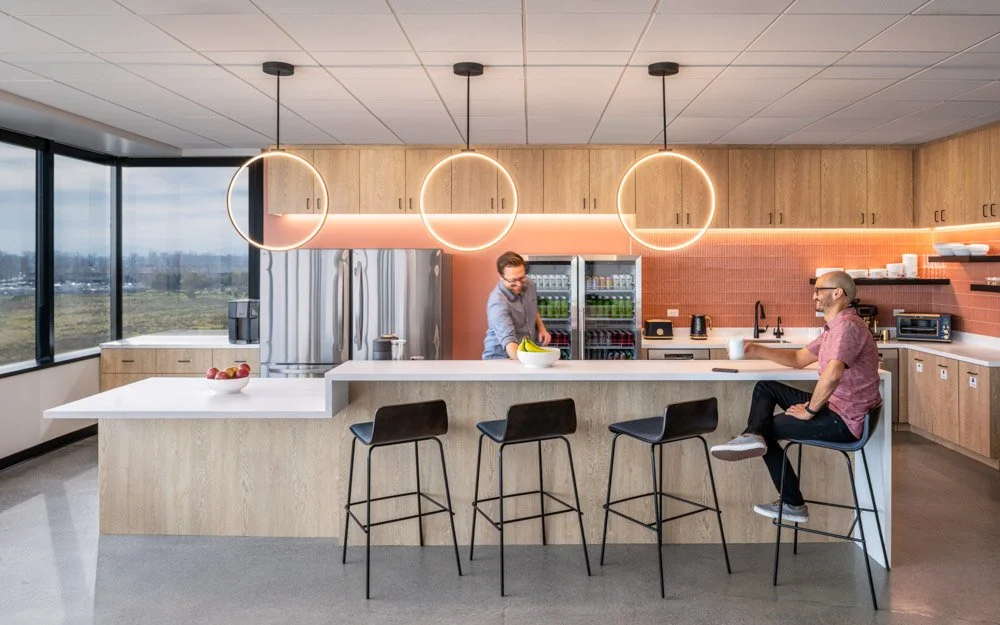
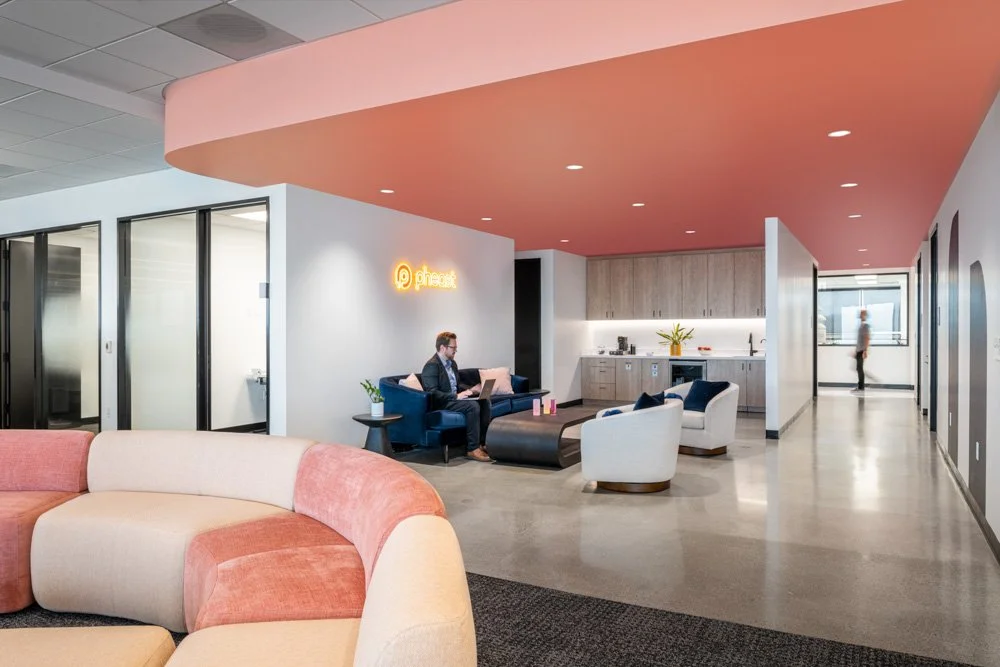
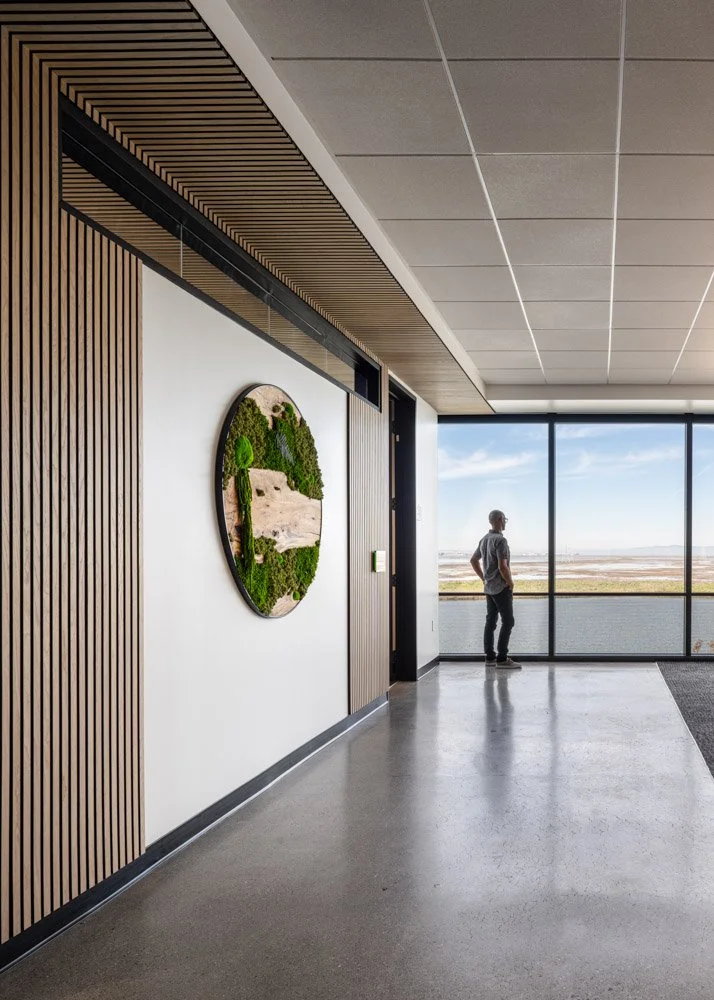
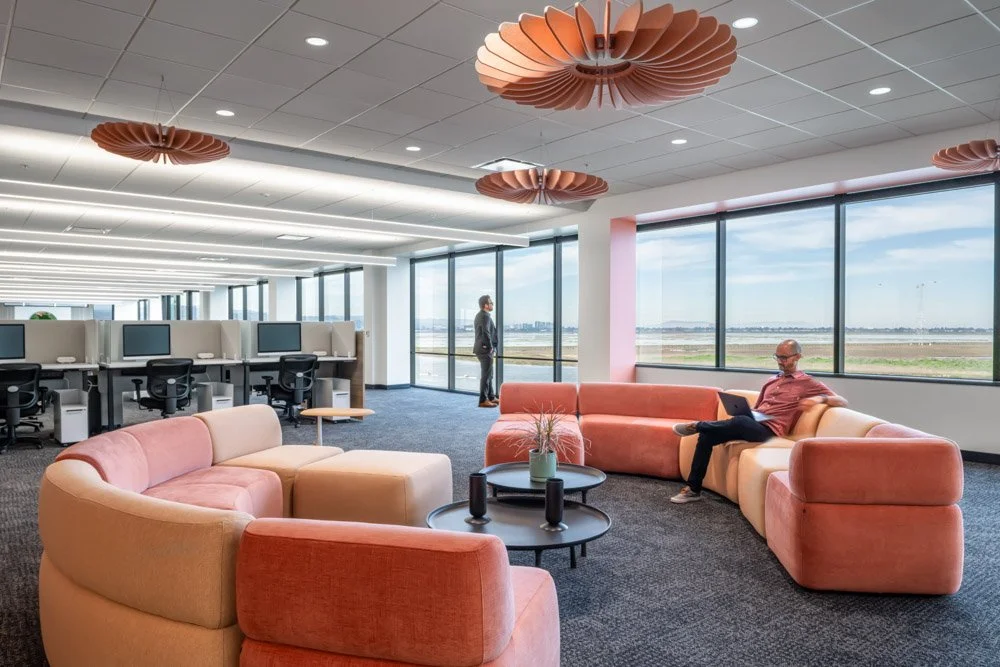
Selective use of pink and salmon accents, tied to the client’s branding, helps anchor key social and collaborative areas without overwhelming the space. These moments of color appear against a restrained backdrop of neutral finishes, letting daylight and views do much of the visual work. The perimeter glazing frames expansive views of the Bay and wetlands, providing a consistent visual reference point throughout the floor.
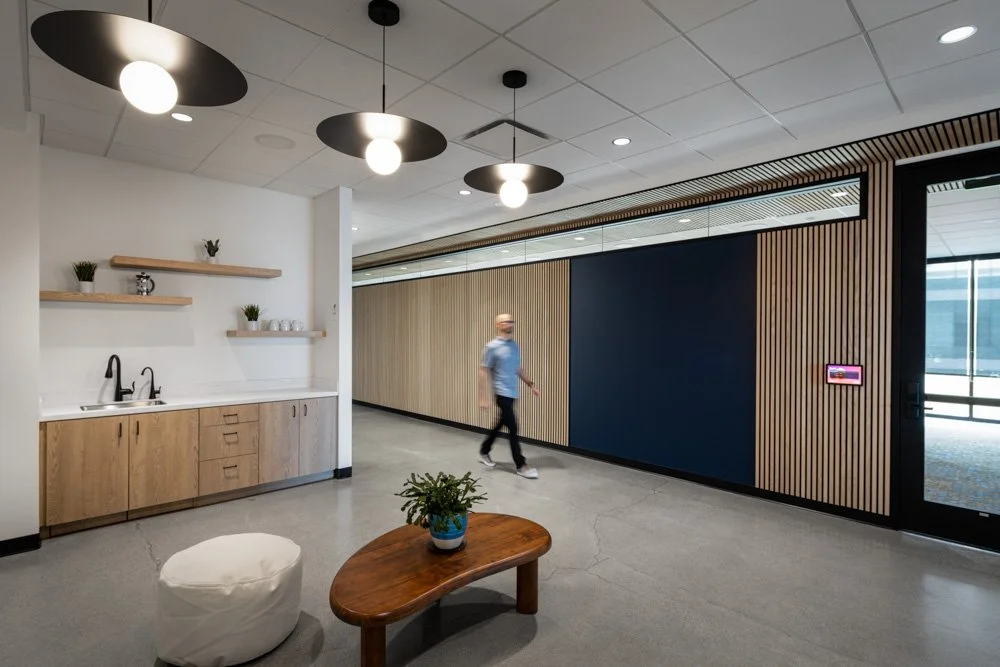
Break areas and informal lounges are intentionally generous. They are positioned to take advantage of the best views, reinforcing the idea that rest and informal interaction are not secondary to focused work, but part of sustaining it. Conference rooms are designed to feel calm and efficient, with transparency that keeps them visually connected to the rest of the office while maintaining acoustic separation.
Constraints & Opportunities
This project came with a set of constraints that directly influenced both the design and the photography.
Design and site conditions included:
Full-height glazing on all sides of the floor plate
Strong daylight and direct sun exposure at certain times of day
Sensitive lab and vivarium environments requiring discretion
A need to keep branding present but understated
Photographic constraints included:
Managing harsh, directional light from extensive windows
Controlling reflections in glass partitions and exterior glazing
Working efficiently in an active, partially occupied workplace
Respecting confidentiality while still showing spatial clarity
At the same time, these constraints created opportunities. The abundance of daylight allowed the photography to emphasize spatial depth and connection to the landscape, while careful control of reflections helped maintain clean sightlines and legibility in the images.
How We Approached the Shoot
The photography was planned around light control and perspective accuracy. Pre-shoot coordination focused on identifying which spaces benefited from direct sun and which were better photographed under softer conditions.
I relied primarily on wide tilt-shift lenses to keep verticals true and maintain a natural sense of proportion—especially important in a space with extensive glazing and long sightlines. In areas with heavy reflections, multiple frames were captured with varying light conditions, and reflections were selectively blocked using black fabric placed outside the frame.
Key decisions included:
Timing key views to avoid blown highlights while preserving exterior detail
Using tilt-shift movements to balance foreground and background focus
Capturing multiple exposures to fine-tune reflections and contrast
Keeping compositions straightforward so layout, material choices, and adjacencies remained clear
The goal was not drama, but accuracy: images that architects, builders, and client teams could rely on for communication and documentation.
Image Highlights
Several sequences help explain how the project works as a whole.
Perimeter office views show how glazing and low partitions allow daylight to move freely across the floor, while still giving teams defined zones for focused work. The photographs emphasize horizon lines and consistent verticals, reinforcing the calm, ordered feel of the space.
Conference room views focus on transparency and proportion. By controlling reflections and balancing interior and exterior exposure, the images make it easy to read room size, furniture layout, and connection to adjacent spaces.
Lounge and break areas are photographed from slightly wider vantage points, highlighting how these spaces relate to circulation paths and exterior views. The restrained use of brand color reads clearly without dominating the frame.
Where labs and vivarium spaces are shown, the emphasis is on clarity and organization rather than equipment detail, respecting confidentiality while still communicating the scale and seriousness of the work being supported.
Results & How the Client Uses the Images
The final image set was delivered as a publication-ready library suitable for multiple audiences. The client and project partners use the photography across website updates, proposals, and internal presentations. The images also support business development efforts by showing how complex life-science programs can be integrated into a thoughtful, humane workplace.
For teams preparing RFPs or award submissions, the photographs provide clear documentation of layout, material decisions, and daylight performance—without requiring lengthy explanation. The neutral, accurate approach ensures the images remain useful well beyond initial marketing cycles.
If you’re completing a commercial or life-science project in the Bay Area and need architecture photography San Francisco teams can use across proposals, portfolios, and marketing, you’re welcome to get in touch through the contact page or explore related work in the portfolio.
Key Takeaways
Full-height glazing shaped both the design and the photographic strategy
Restrained brand color works best when paired with strong daylight and neutral finishes
Tilt-shift lenses help maintain accuracy in spaces with long sightlines and glass
Reflection control is critical in highly glazed office and lab environments
Lounge and break spaces play a functional role in high-intensity workplaces
Clear, straightforward compositions support long-term image usability
Confidential projects can still be documented meaningfully without revealing sensitive details