

Centering the Details: Flexibility and Texture on the Fifth Floor of 680 Folsom
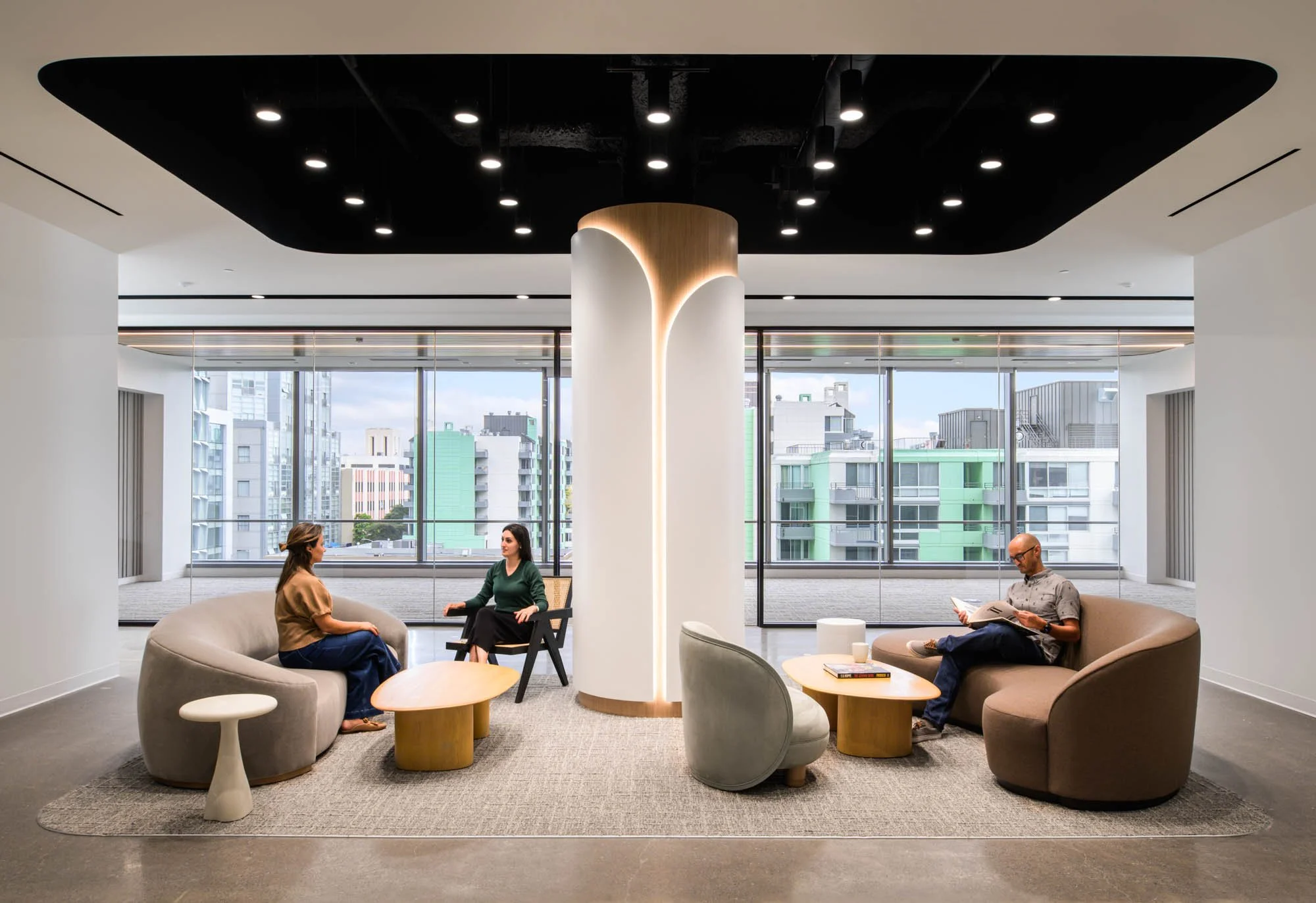
Two speculative suites rarely get this level of considered design, but the fifth floor of 680 Folsom Street shows how thoughtful tenant improvements can make a space immediately usable—especially in a slower commercial leasing market. These suites weren’t designed for a specific company; they were designed to give any future tenant a strong first impression and a clear sense of possibility.
The architectural team leaned into a fully neutral palette, using texture as the main source of visual depth. Photographing the space meant paying close attention to how light revealed those surfaces and how the architectural moves—especially at the entries—shape the arrival experience. The project became a study in adaptability: how to express character without committing to a color story that might limit who feels at home here.
Project Overview
Project: 680 Folsom Street, Fifth Floor
Project Type: Spec Suite / Spec Buildout
Building Type: Commercial Office
Location: San Francisco, CA
Photography Year: 2025
End Client: BXP
Architect: Revel Architecture + Design
General Contractor: MCS Construction
Photography Scope: Interior Architectural Photography
Video Scope: 60-90 second highlight film
Client Use: Portfolio, Online and Print Marketing, Client Presentations + Proposals
Visuals: Rob Calderwood Architectural Photography (San Francisco Bay Area)
Design Story
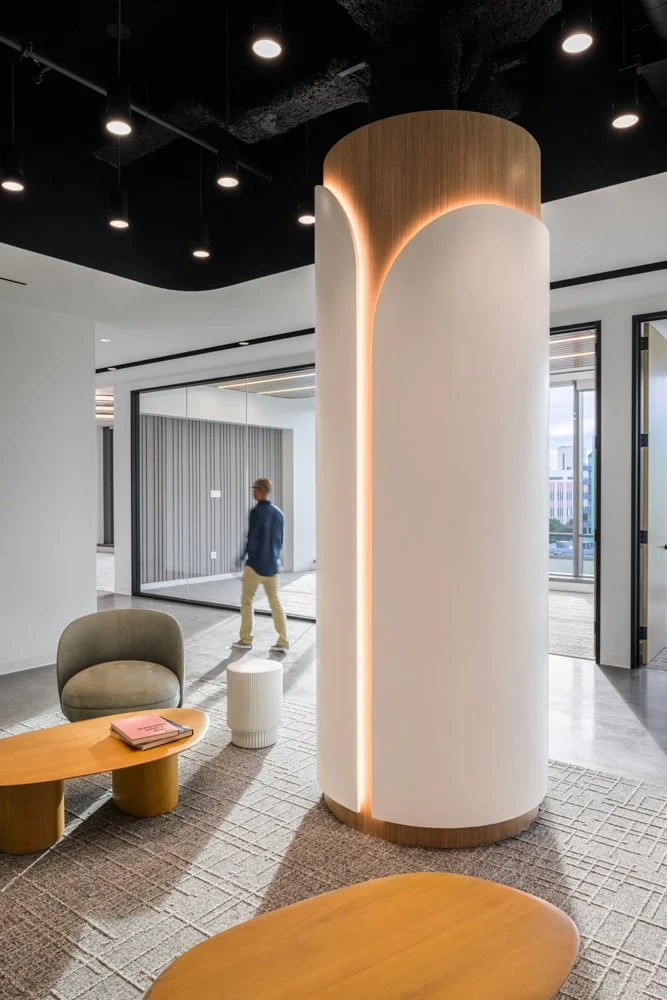
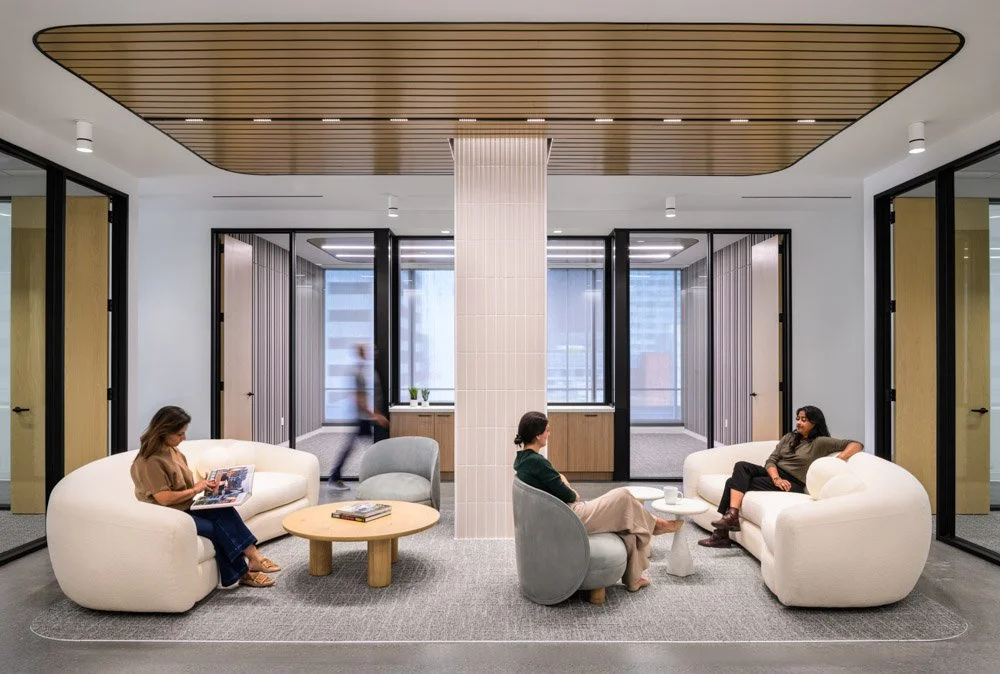
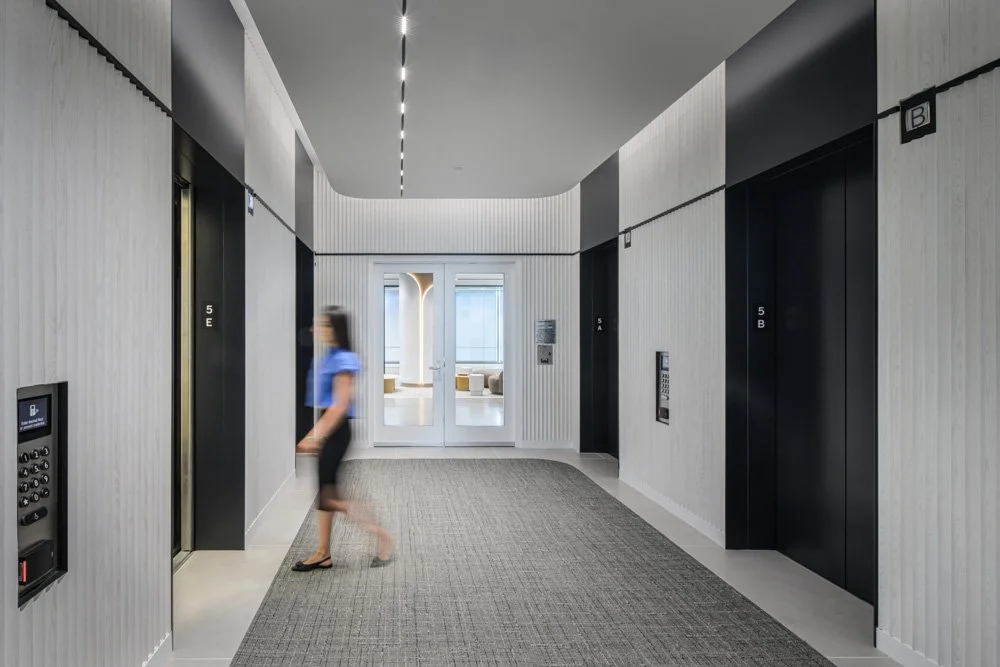
Two suites share a mirrored layout: a central elevator lobby opens into an entry on either side of the floor plate. Each entry centers around a structural column that couldn’t be moved. Instead of hiding these columns, the designers turned them into signature moments.
One suite features a round white column clad with custom wood accents and soft, concealed strip lighting. The other uses a square form wrapped in glossy, cream-colored tile, washed with overhead light. These columns give each suite an identity from the moment someone steps in.
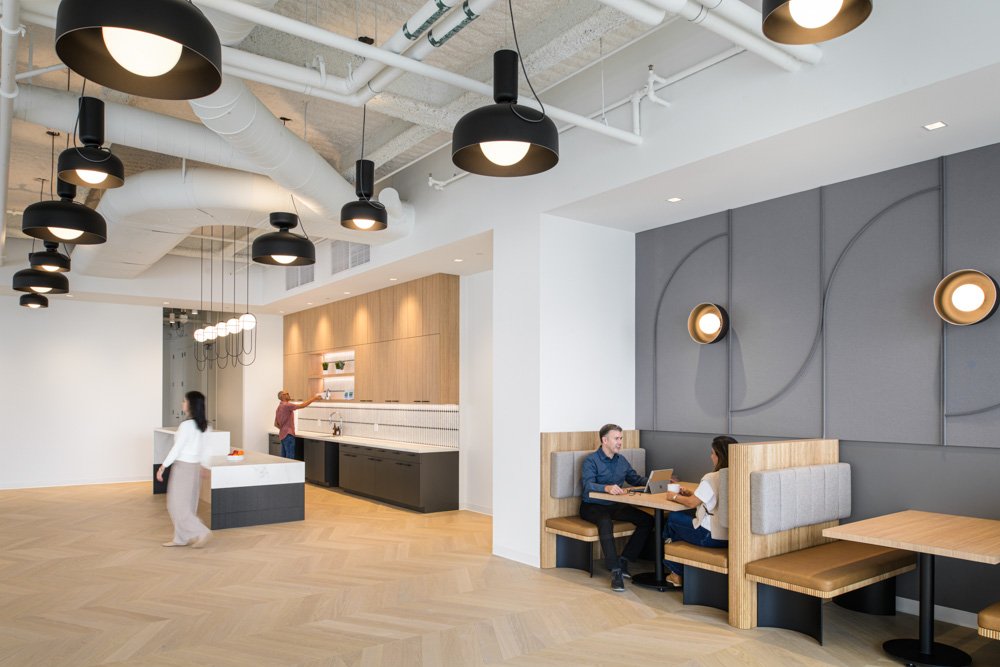

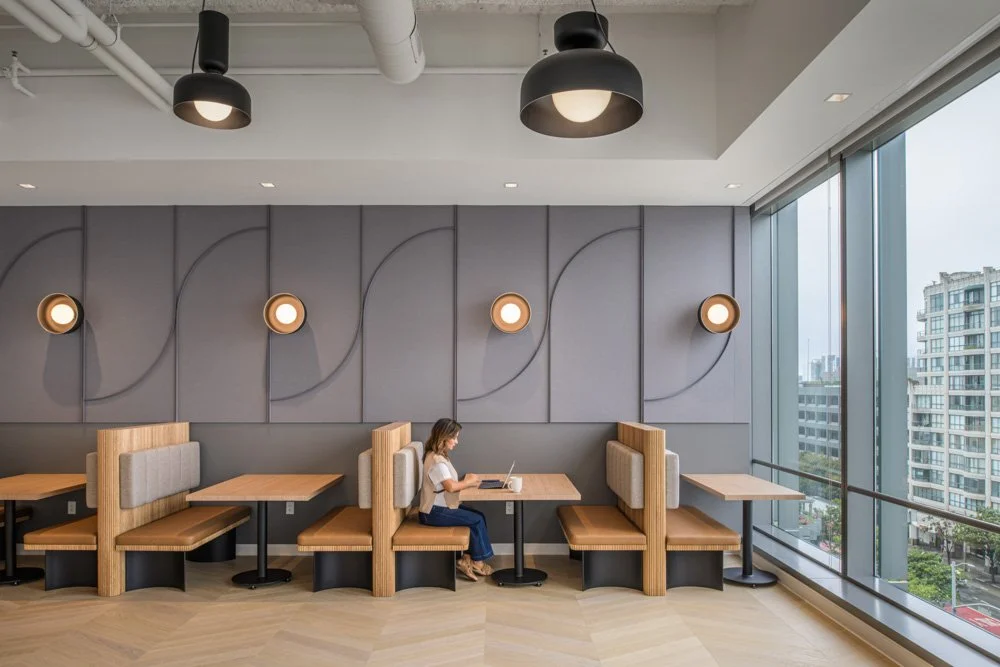
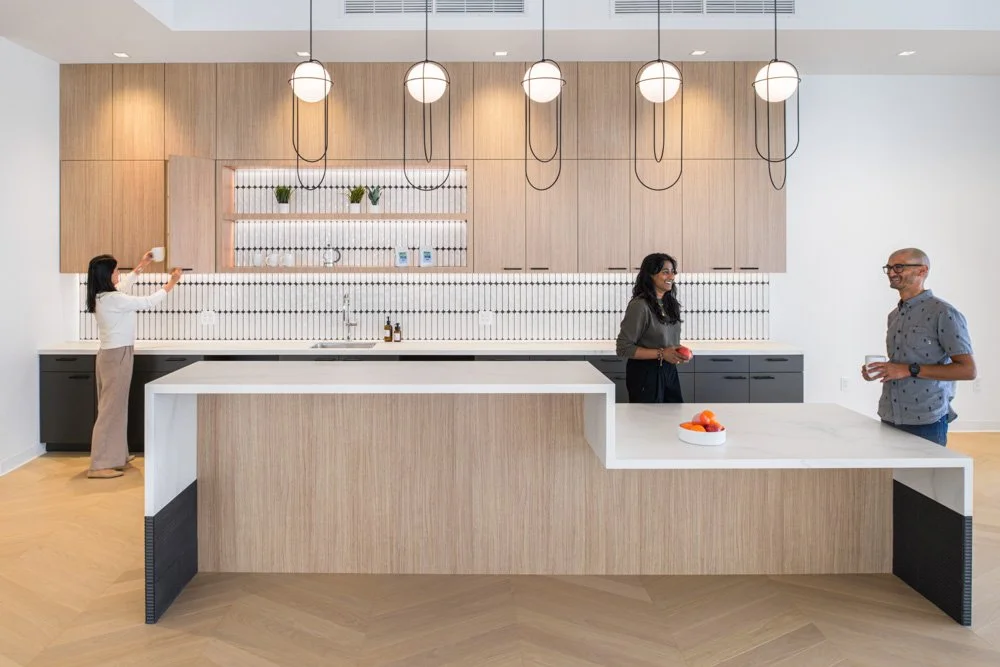
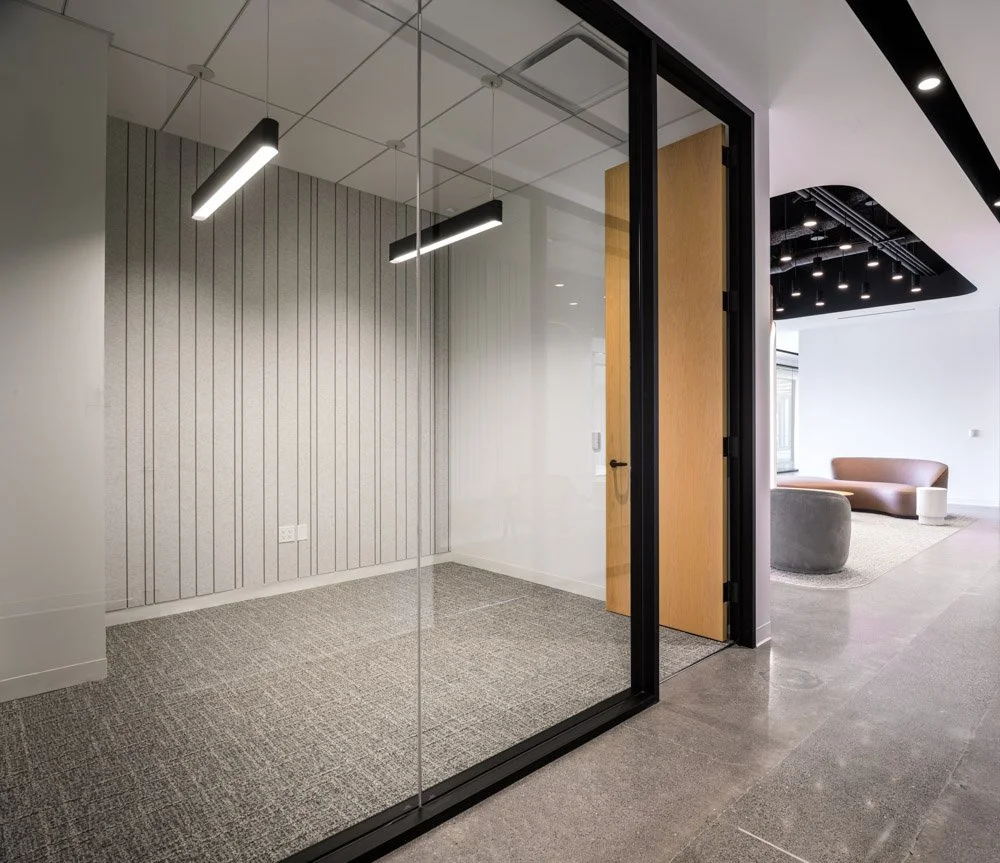
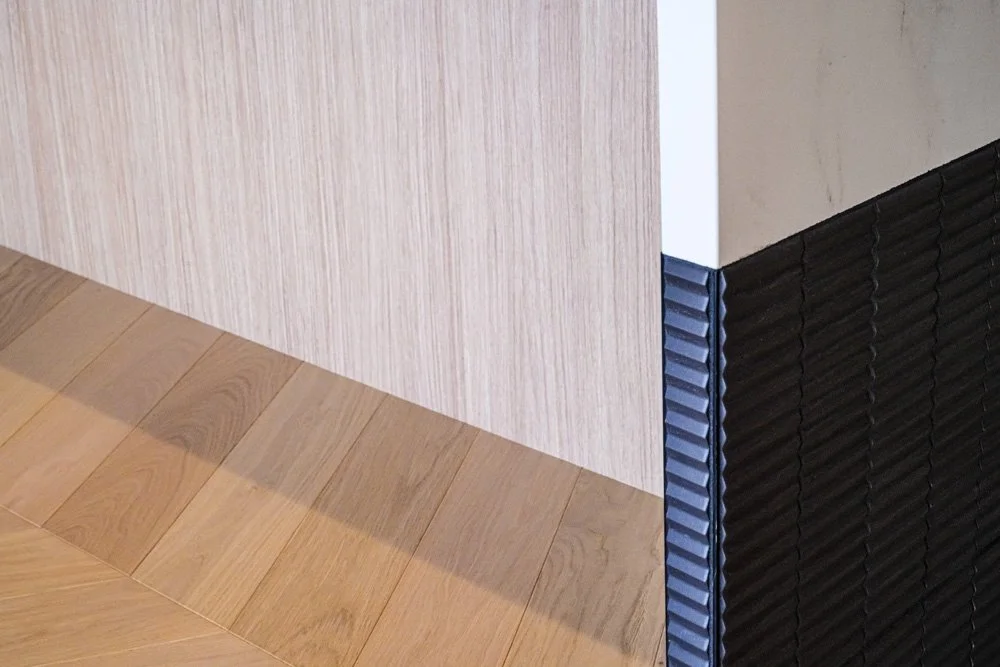
The broader palette is intentionally quiet: warm wood paneling, off-whites, polished concrete, and textured materials that create variety without relying on color. Geometric tiles, ribbed surfaces, and plush seating play a big role in shaping comfort and scale. In a speculative environment—where branding needs to be flexible—this approach gives the future tenant room to define their own narrative.
Constraints & Opportunities
Most of the design constraints came from the existing floor plate and column grid. Those fixed conditions shaped the entries and influenced how spaces transitioned from reception areas to kitchens and work zones.
From a photographic standpoint, several factors shaped our decisions:
Harsh light from the exterior glazing meant chasing the right times of day or lowering curtains to soften the contrast.
Highly symmetrical entry layouts required careful composition. Symmetry can easily look rigid, but here it frames the material choices and gives clear orientation cues.
Simultaneous filming and stills demanded extra coordination, especially with models present for only one of the days.
Texture-driven materials needed directional light to read clearly. Diffuse light softened them; angled light revealed depth.
These constraints weren’t obstacles—they helped determine the angles, focal lengths, and sequences that best communicated how the suites function.
How We Approached the Shoot
We photographed and filmed the project over several days so each mode—stills, motion, aerial—had enough time and focus.
On the first day, with models available, I shot stills while a second camera captured film from matching viewpoints. This dual setup made the footage more cohesive with the stills and gave the client a consistent visual language across all marketing formats. Having the architect’s team on site was invaluable—they modeled naturally, helped with staging, and fine-tuned the small details that make a frame feel intentional.
On the second day, the space was empty except for my assistant, who stepped in as a stand-in model when we needed scale. We focused on:
Slider shots to trace material transitions
Gimbal work for circulation sequences
Timelapses to follow mid-afternoon light across textured panels
A third visit focused on exterior footage, both aerial and ground-based. Capturing neighboring anchors like SFMOMA and Moscone situates the building in its urban context—helpful for clients pitching the location to prospective tenants.
Image Highlights
Entry Columns
The round and square columns define their respective suites. Photographing them required managing reflections on glossy tile, balancing the glow of concealed lighting, and preserving the crisp lines that make symmetry feel intentional rather than rigid.
Kitchen Islands
The waterfall countertop is familiar territory, but here a mid-height band of black geometric tile interrupts that expected drop. It’s a small but impactful detail. The texture catches light differently than the stone, giving the island a layered presence in both stills and motion.
Banquette & Lounge Zones
Ribbed wood paneling and soft upholstery create a quiet counterpoint to the open office areas. These spaces shine in lifestyle shots: simple moments of people sitting, talking, or working help prospective tenants imagine the day-to-day rhythm of the suite.
Material Details
Close-up shots highlight cabinet hardware with subtle non-slip texture, wavy tile surfaces, and layered finishes. These are easy to overlook in a walkthrough, but they photograph beautifully and help convey the project’s quality.
Results & How the Client Uses the Images
Because the suites were designed to be move-in ready, the images and film serve multiple purposes:
Architecture and GC portfolio updates
Proposals and RFP submissions
Leasing packages and presentations
Social and website content
Manufacturer interest in the tile and island details
Future award submissions
The combination of stills, motion, and context footage gives the team flexibility: a full toolkit for marketing a space that’s built to be adaptable.
📌If you’re wrapping up a workplace or tenant improvement project in the Bay Area and need publication-ready photography or film, you’re welcome to reach out through the contact page. You can also browse more workplace projects in the featured projects blog page.
Key Takeaways
The design uses neutral materials and texture to support any future tenant’s brand.
Fixed structural columns became distinct architectural features rather than elements to hide.
Harsh glazing light and symmetrical layouts shaped the photographic approach.
Multi-day coverage allowed for stills, motion, aerials, and timelapses.
Working with the architect’s team improved staging and modeling.
The images support leasing, proposals, awards, and broader marketing use.
This approach shows how a commercial architecture photographer can frame flexibility and tactile detail in speculative workplace design.