

Quiet Design Details in a Redwood City Life Science Workplace
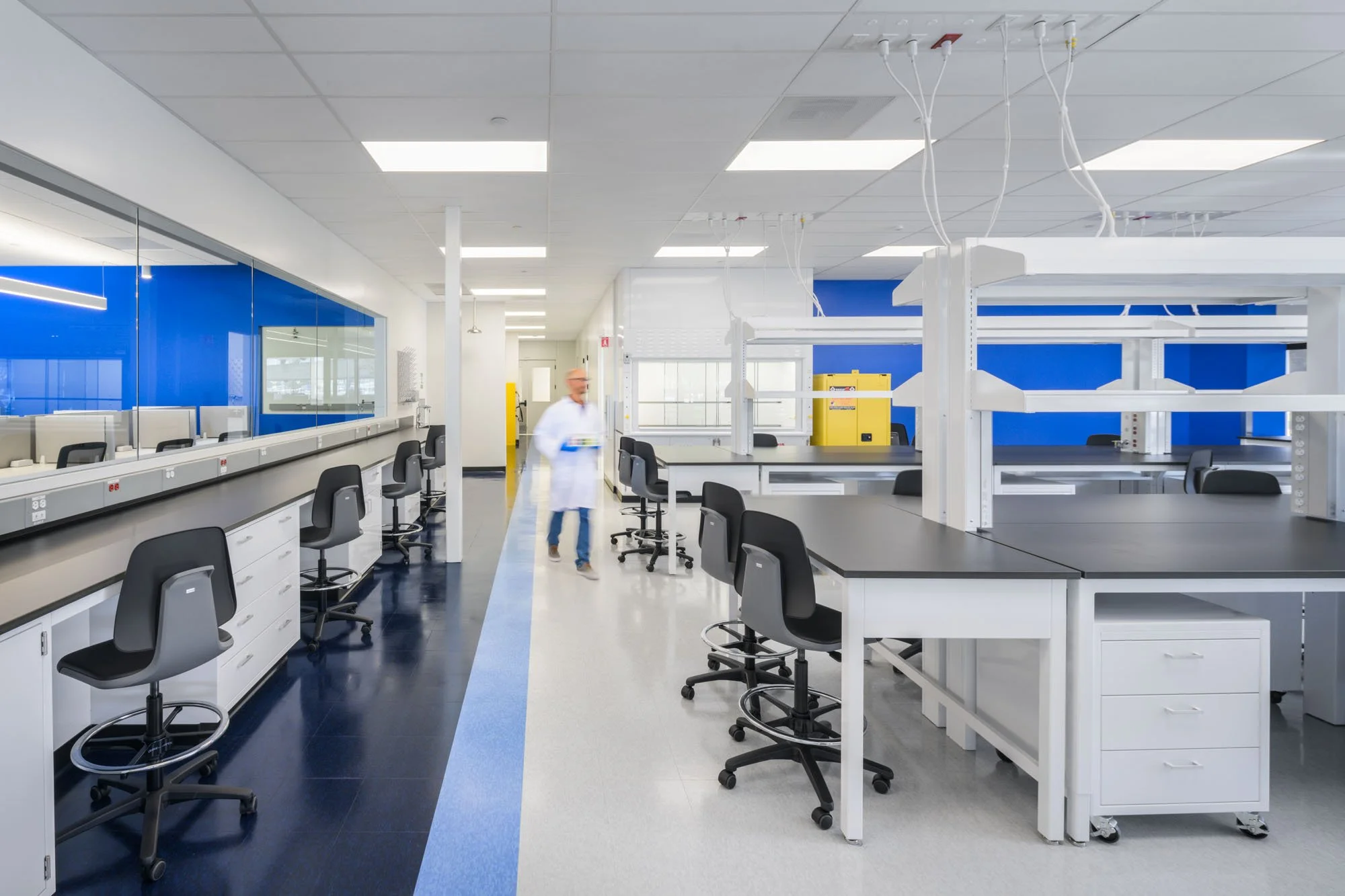
A confidential biotech client in Redwood City needed a workplace that could support both office and lab functions in one connected environment. The project brought together focused work areas, labs, conference rooms, private phone rooms, flexible lounge spaces, and shared gathering areas for a team that depends on both concentration and collaboration.
The design is intentionally restrained. Rather than relying on loud gestures, the space uses a calm neutral palette, measured brand accents, outdoor views, and careful alignments between flooring transitions and overhead soffits. Those details may not call attention to themselves at first glance, but they shape how the workplace feels and how it photographs.
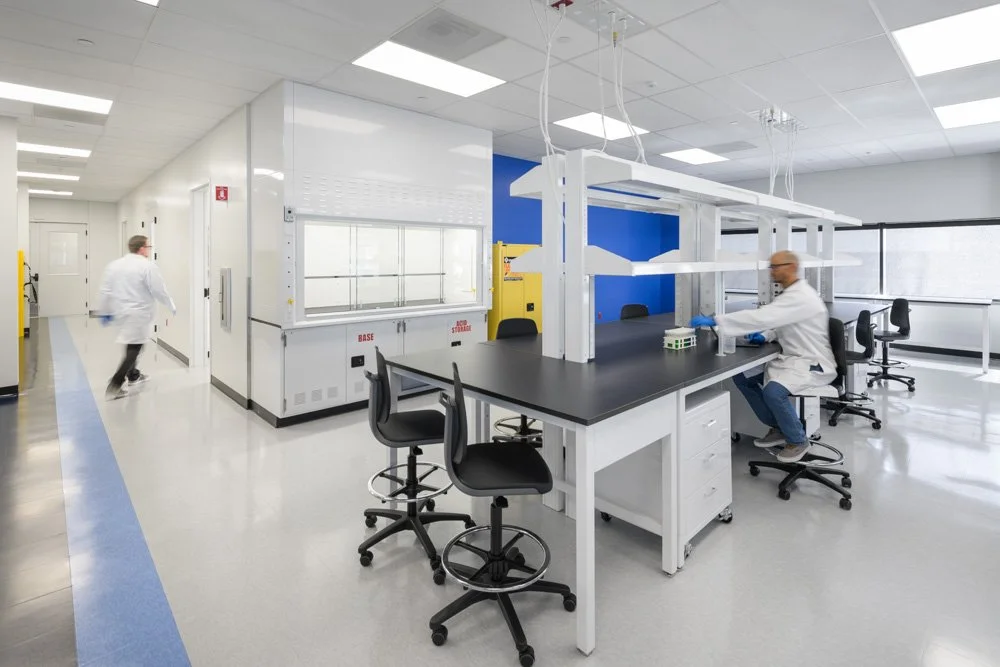
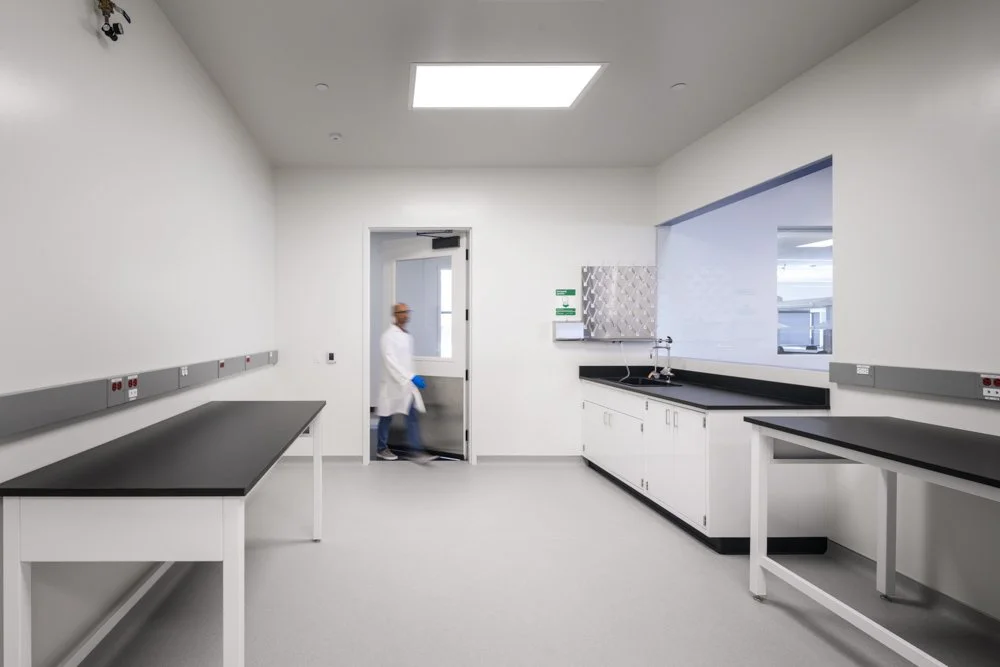
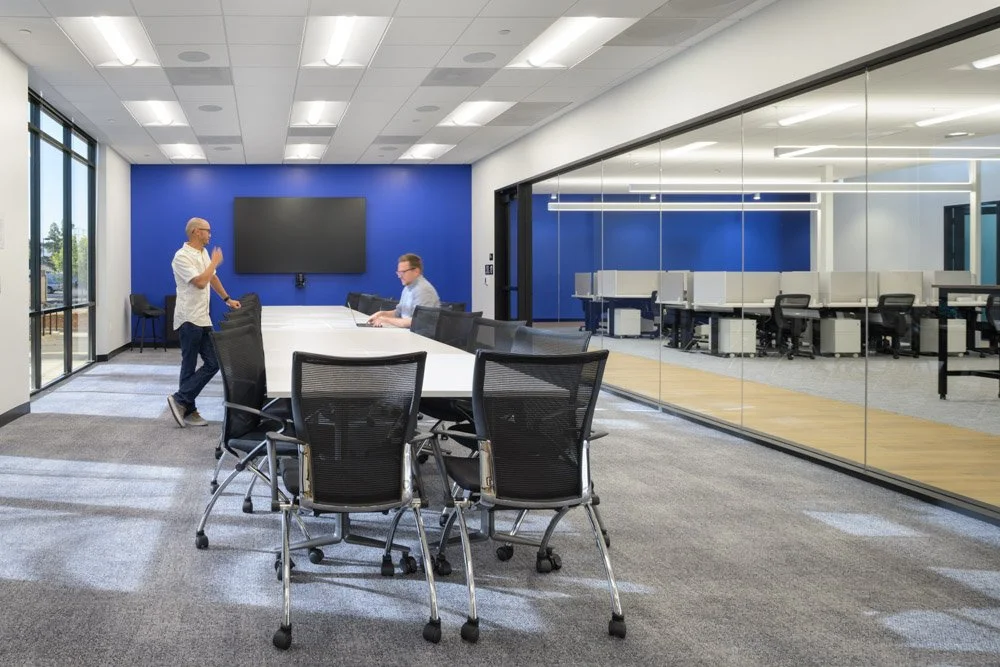
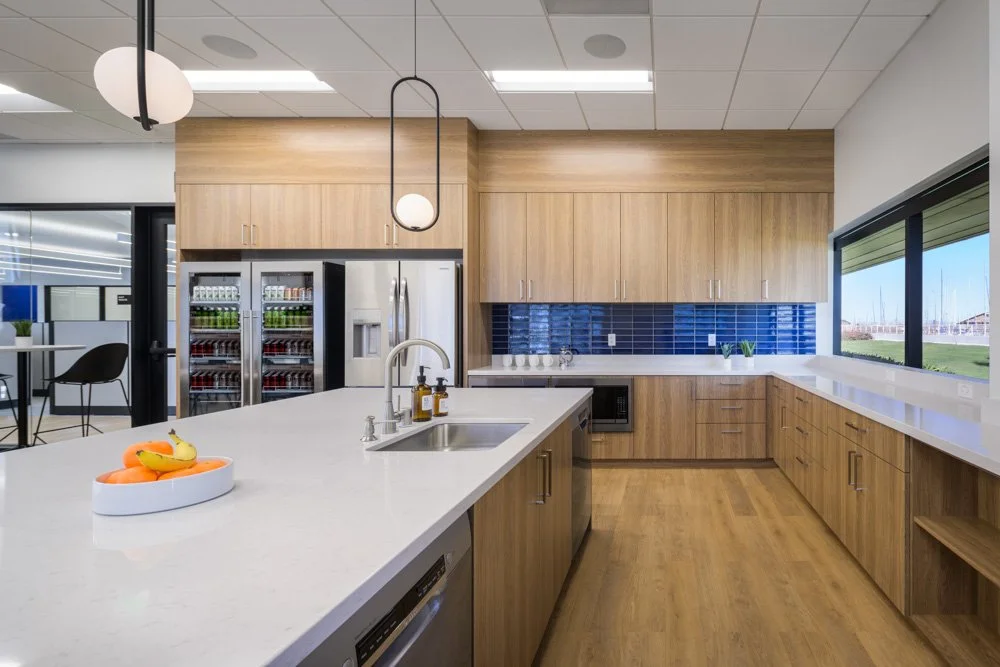
For this project, the main photographic goal was to create a useful image set for portfolio, online and print marketing, and client presentations. As an architectural photographer Bay Area teams hire for finished workplace and life science projects, I focused on showing the relationship between offices, labs, support spaces, and the quiet design decisions that hold the project together.
Project Overview
Project: Confidential Biotech Client
Project Type: Tenant Improvement
Building Type: Life Science Workplace
Location: Redwood City, CA
Photography Year: 2025
End Client: Confidential Biotech Client
Architect: DGA Planning Architecture Interiors
General Contractor: Landmark Builders
Key Partners: Genie Scientific
Photography Scope: Interior Architectural Photography
Client Use: Portfolio, Online and Print Marketing, and client presentations
Photographer: Rob Calderwood Architectural Photography (San Francisco Bay Area)
Design Story
The central story of this project is collaboration through proximity. Office staff, lab users, meeting spaces, and flexible support areas all needed to work together within one environment. For a biotech team, that physical closeness can help support faster communication, stronger team identity, and a more connected daily workflow.
The workplace includes a mix of settings. Open work areas support regular desk-based tasks. Small conference and breakout rooms give teams places to meet without taking over larger shared spaces. Private phone rooms allow for focused calls. Lounge areas create informal options for conversation, solo work, or a short break from the lab and office routine.
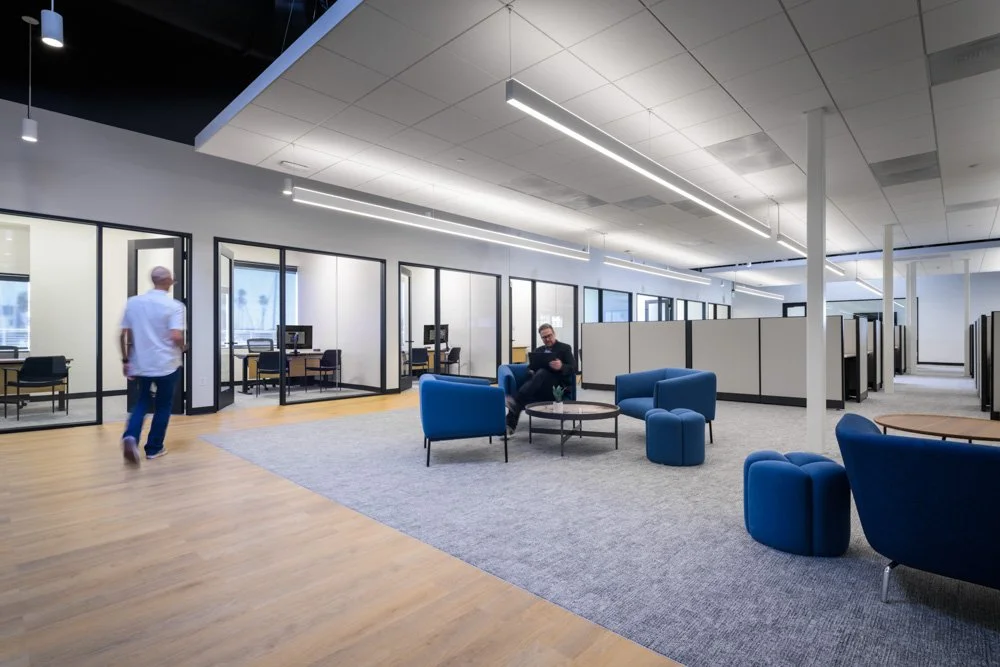
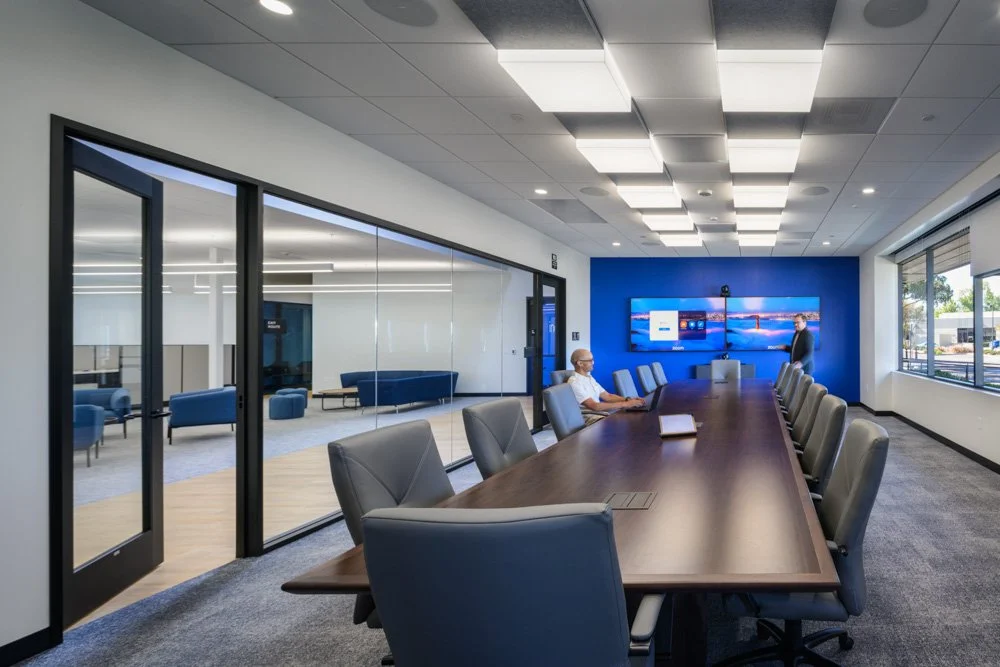
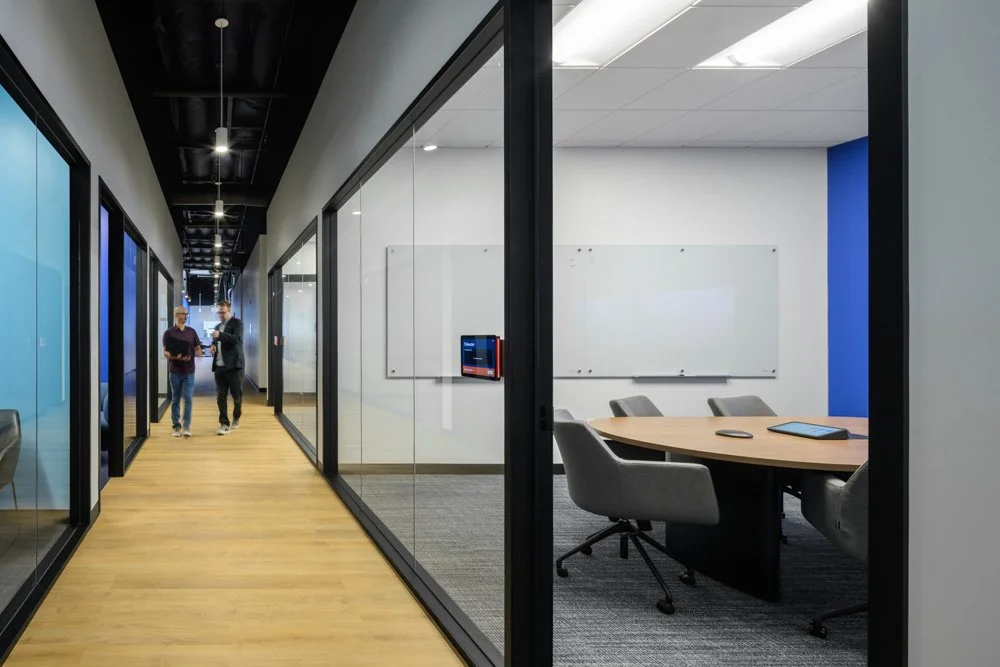
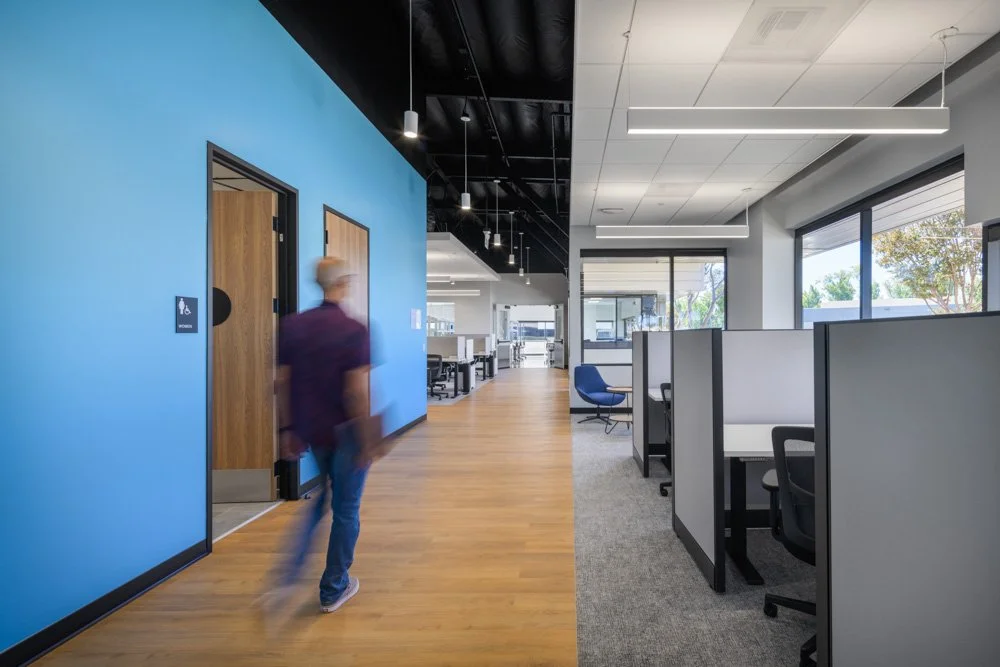
The labs are part of that same story. They are not treated as a separate visual world. In the image set, they sit alongside corridors, conference rooms, work areas, and shared spaces, helping show the full range of the workplace.
The design language is subtle. Flooring transitions align with soffit edges overhead. Accent walls bring in brand color without overwhelming the space. Neutral finishes keep the environment calm and focused. Views toward outdoor landscaping and nearby wetlands or marina areas give users a visual break from the intensity of the workday.
For an interior architecture photographer SF and Bay Area teams may call on for life science projects, those quiet design moves matter. They are easy to miss, but they often explain the discipline behind the space.
Constraints & Opportunities
The main constraint was that the space was still being completed during the shoot. Some workers were finishing tasks, which meant certain rooms were only available at specific times. That shaped the schedule and required flexibility throughout the day.
In a perfect world, every room would be photographed at its best time for natural light. In practice, access often comes first. Some spaces had to be photographed when the light was not ideal, including rooms with harsh morning sun. That created exposure challenges, strong contrast, and window views that needed careful handling.
A few constraints shaped the final photography:
Active completion work: Room availability changed during the day based on remaining construction and punch-list activity.
Harsh sunlight: Some rooms had direct morning sun that needed to be controlled on site and refined in post-production.
Window views: Outdoor views were important, but they needed to be balanced so they did not overpower the interiors.
Exit sign color cast: Green light from exit signs can spill onto nearby walls and ceilings, creating extra retouching challenges.
Subtle design language: Because the design was not flashy, the photography needed to pay close attention to alignment, proportion, and controlled compositions.
These constraints also created opportunities. The calmer design gave the images room to focus on geometry, light, and workplace function. The outdoor views added context. The labs, work areas, and shared rooms gave the final gallery a useful range for marketing and portfolio use.
How We Approached the Shoot
Before the shoot, I walked the project and scouted potential images. That helped me create a rough plan for the day, including which views mattered most, which spaces needed careful light control, and where the design alignments would be strongest.
On the day of the shoot, the plan had to stay flexible. Some rooms became available later than expected. Other spaces needed to be photographed sooner because workers were moving through the building. That is common on commercial interiors, especially when photography happens close to completion.
For the rooms with difficult sunlight, I worked with an assistant and used several practical controls. In some cases, curtains were lowered to soften the light. I also used a large black cloth to block harsh sunlight from entering the space. Later, in post-processing, I composited in more controlled window views so the final images would feel natural and balanced.
I also used a small custom tool I created to cover exit signs during the shoot. Exit signs are necessary in the building, but the green light they cast can contaminate nearby walls and ceilings. Blocking that color cast on site makes the final retouching cleaner and helps preserve the intended finish colors.
The quieter design details required a more precise camera approach. In a few key corridor and work area views, I focused on the alignment between flooring transition lines and overhead soffit edges. A tilt-shift lens is especially useful for this kind of composition because it allows the camera to keep vertical lines straight while carefully positioning the frame.
For the lab images, I brought simple props, including PPE and basic lab items, to help the space feel active without misrepresenting it. At one point, while I was photographing my assistant as a model in the lab, a small group from the tenant company walked through. One person joked, “Oooh, some science is happening.” The funny part, of course, was that we were only staging the scene while the actual scientists were the ones walking by.
That kind of moment is a good reminder that architectural photography often sits between documentation and storytelling. The goal is to make the image feel believable and useful while staying honest about the space.
Image Highlights
The lab images help establish the project as a life science workplace rather than a conventional office. Because the labs were mostly empty of equipment and everyday work materials, the compositions needed careful staging. A model in PPE and a few simple props helped show scale and use without cluttering the space.
The conference rooms and breakout spaces show the flexibility of the workplace. These rooms support smaller discussions, private meetings, and quick team conversations. Photographing them clearly helps the viewer understand how the office supports different working styles throughout the day.
The kitchen and all-hands room add another layer to the project. These shared areas are important because they support the full team, not just one department or work mode. In the image set, they help show how the workplace moves from focused work to group connection.
The corridors and adjacent work areas are some of the most important views for understanding the design discipline. The alignment between flooring transitions and soffit edges creates a quiet visual order. These are the kinds of details that may not be obvious in a quick walkthrough, but they photograph well when the camera is placed with care.
The views toward outdoor landscaping and nearby wetlands or marina areas also matter. They give the project a sense of place and offer visual relief from the interior work environment. For teams using these images in marketing or presentations, that context helps communicate a more complete workplace experience.
Results & How the Client Uses the Images
The final image set gives the project team a polished visual library for website portfolios, print and online marketing, and client presentations. The images show more than individual rooms. They explain how the office, labs, support spaces, and shared areas work together.
For the architect and builder, the photographs help document the quality of the finished tenant improvement. They show planning decisions, material choices, room types, and details that can support future proposals and project conversations.
For the client, the images help communicate the workplace environment without naming the tenant publicly. That is especially useful for confidential life science projects, where the design story can still be shared without exposing sensitive company information.
This kind of assignment benefits from a commercial architecture photographer who understands both the visual and practical realities of finished commercial interiors: access windows, active punch-list work, mixed light, sensitive client names, and the need for ready-to-use deliverables.
Related workplace and life science projects can be viewed in featured work. More information about interior and commercial project photography is available at my services page.
If you’re documenting a completed workplace, lab, or tenant improvement project in the Bay Area, you’re welcome to reach out through contact or check my availability.
Key Takeaways
Design: The project brings labs, office work areas, meeting rooms, and shared spaces into one connected workplace.
Users: The space supports flexible working styles through lounges, small conference rooms, breakout areas, and private phone rooms.
Workplace: Lab and office functions are shown together, helping communicate the full environment of a confidential biotech team.
Photography: A pre-shoot walkthrough helped identify key views, room priorities, light challenges, and important alignment details.
Constraints: Active completion work affected room availability, requiring a flexible schedule throughout the shoot day.
Light Control: Harsh morning sun was managed with curtains, a large black cloth, and post-production compositing for balanced window views.
Details: Flooring transitions aligned with overhead soffit edges became an important visual thread in the image set.
Outcomes: The final photographs support website portfolios, print and online marketing, and client presentations while preserving tenant confidentiality.